

 Early Life and Education
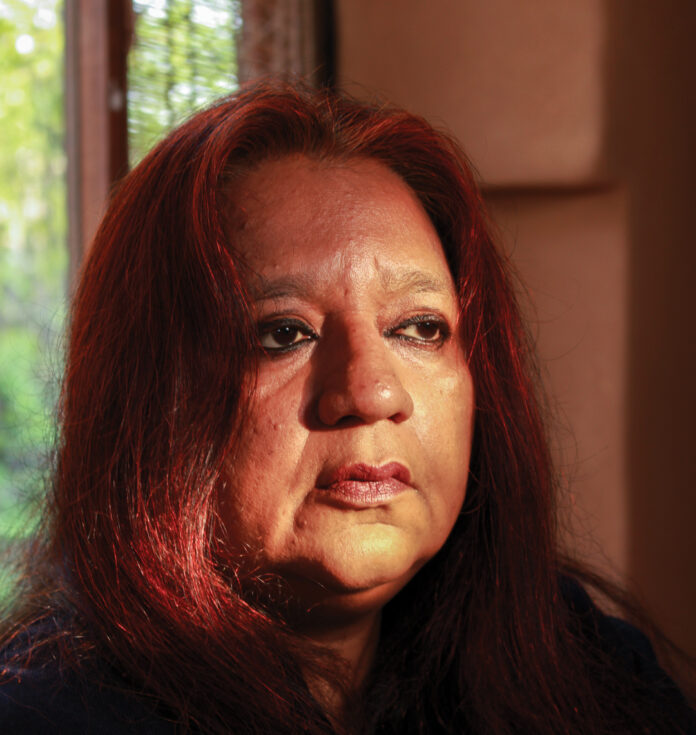
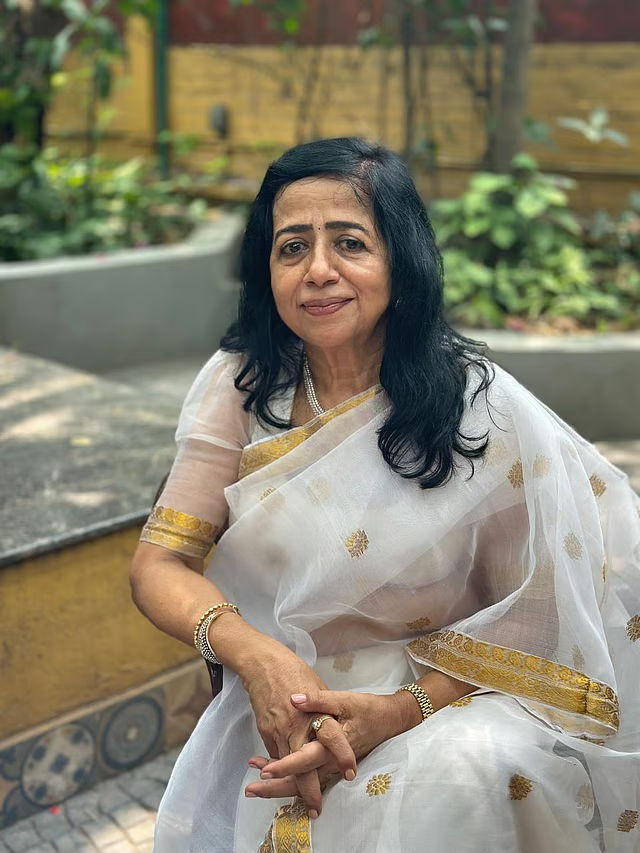
Revathi Kamath was born in 1955 in Hyderabad, India, into a family that valued education and creativity. From an early age, she displayed a keen interest in art and design, which eventually led her to pursue architecture at the prestigious School of Planning and Architecture (SPA), Delhi. Graduating in 1977, she was among the few women in her batch, navigating a field largely dominated by men. Her education laid the foundation for her unconventional approach—one that would later challenge the very norms of modern architecture.
Philosophy: Architecture Rooted in Earth and Tradition
The impersonal, steel-and-glass style that dominated Indian architecture after independence was rejected by Revathi Kamath. She instead used stone, bamboo, and mud—materials that have influenced India’s architectural legacy for millennia. Her guiding principle was straightforward yet revolutionary: “Build with the earth, not against it.”She thought that rather than just following international trends, architecture should represent the needs, culture, and climate of its people. Her creations demonstrated that sustainability and beauty could coexist by fusing traditional knowledge with contemporary usefulness.
Breaking Barriers in a Concrete World
When Revathi began her practice in the 1980s, India was rapidly urbanizing, with concrete becoming the symbol of “progress.” Architects who experimented with mud or bamboo were often dismissed as impractical or outdated. But Revathi persisted. She collaborated with traditional craftsmen, learning ancient techniques like rammed earth, wattle-and-daub, and bamboo joinery. Her early projects, though small, were bold statements—homes and community spaces that stood as living proof of her vision.
Landmark Projects: Where Mud Meets Modernity
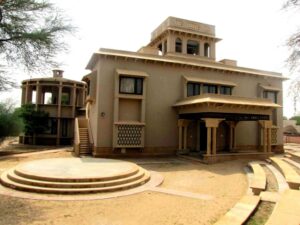
One of her most celebrated works, the Nalin Tomar House (Delhi, 1990s), redefined what mud architecture could be. With its undulating walls, open courtyards, and natural cooling systems, the house was a masterpiece of climate-responsive design. Another milestone was her Bamboo House in Delhi, a structure that demonstrated bamboo’s strength and versatility. She also designed the TARA (Development Alternatives) Campus, creating low-cost, energy-efficient buildings for rural development. Each project was a testament to her belief that architecture should empower, not alienate.
Teaching and Advocacy: Inspiring the Next Generation
In addition to her construction profession, Revathi had a strong interest in teaching. She encouraged students to delve beyond textbooks and interact with local resources and communities while teaching at SPA Delhi and CEPT Ahmedabad. Numerous young architects were influenced by her articles and talks on craft-based design, sustainable urbanism, and clay construction. She also promoted eco-friendly housing options in rural and tribal communities while working with non-governmental organizations.
Legacy: The Rebel Who Changed Indian Architecture
Revathi Kamath passed away in 2020, but her ideas live on. At a time when sustainability is a global priority, her work feels more relevant than ever. She proved that mud could be modern, that bamboo could be bold, and that architecture could be humane. Today, her projects are studied worldwide, and her philosophy inspires a new wave of earth-centric designers.
Final Thought: Why Revathi Kamath Matters
In an era of skyscrapers and smart cities, Revathi’s work reminds us that true progress is harmony, not domination—of nature, culture, and community. She wasn’t just an architect; she was a storyteller, weaving India’s past into its future, one mud wall at a time.

