

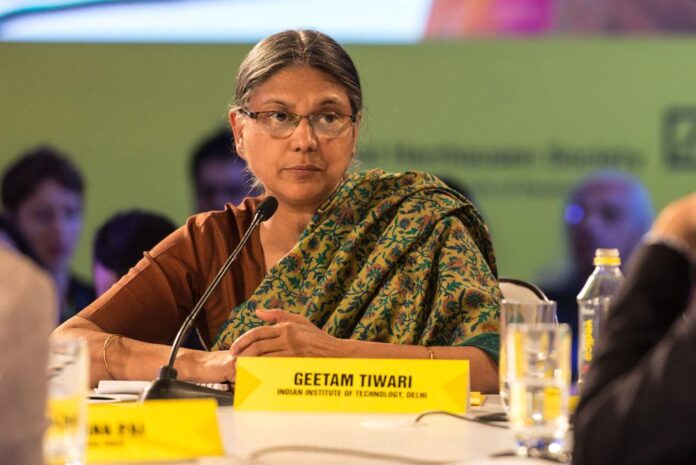

A Visionary at the Crossroads of Engineering and Urbanism
Prof. Geetam Tiwari is a pioneer in the field of infrastructure development in India, skillfully fusing architecture, urban planning, and civil engineering. Although she is best recognized for her leadership in transport engineering and traffic safety, her impact also reaches far into the architectural field, which is where human behavior, mobility patterns, and spatial design all come together. She has changed the way Indian cities plan and implement transportation infrastructure that promotes both function and human dignity in her role as Chair Professor at the Transportation Research and Injury Prevention Centre (TRIPP) at IIT Delhi.
Designing for Human-Centric Urban Infrastructure
The paradigm of city planning is radically changed by Geetam Tiwari’s work, moving away from vehicle-centered design and toward people-centered design. In order to develop streetscapes and public areas that put safety, accessibility, and inclusivity first, she frequently collaborates with architects, urban designers, and policy planners. In line with the architectural objectives of place-making and sustainable community development, she promotes urban settings where bicycles, pedestrians, and users of public transportation are given top priority when planning decisions are being made. Particularly for the elderly and those with disabilities, her research supports architectural frameworks that integrate universal design principles.
Influence on Architectural Practice and Policy
Professor Tiwari has established a standard for integrating infrastructure into architectural logic through her work on the Delhi BRT corridor, redesigns of metro station access, and planning for non-motorized transportation. Transit hubs serve as community anchors, and these interventions go beyond technical solutions to establish public areas that serve as social infrastructure. Her advice on flow optimization, circulation patterns, and spatial layouts frequently becomes essential when public buildings and transit-oriented developments are being architecturally planned. By emphasizing wayfinding, visibility, and user behavior, she improves the built environment and safety.
Shaping Future-Ready Urban Design Frameworks
In an era of increasingly urbanizing Indian cities, Prof. Tiwari’s work offers the interdisciplinary cooperation and data-driven insight required to direct intelligent, sustainable growth. Her contributions to the creation of design criteria for low-emission zones, pedestrian-centric city layouts, and road safety audits have been significant. Her policy contributions have impacted city ordinances and architectural rules, promoting integrated planning between urban local bodies, engineers, and architects. Numerous prospective smart city, metro extension, and urban revitalization projects in India are currently guided by these frameworks.
Mentoring the Next Generation of Built Environment Leaders
Professor Tiwari is not just a technical specialist but also a mentor and educator who is influencing the next generation of professionals in the fields of urban planning, architecture, and transportation. She aggressively encourages engineers and architects to think outside of their silos and to pursue cross-disciplinary learning. Her students and associates have since influenced city planning in India and outside, bringing her distinct vision of inclusive, safe, and cleverly planned cities with them.
A Woman Reimagining Infrastructure for the 21st Century
Architecture and infrastructure may coexist as instruments for equity and advancement, as demonstrated by the work of Professor Geetam Tiwari. The way that engineers and planners shape human-centered environments has been redefined by her ability to bridge the gap between research, field experience, and policy impact. Smarter, safer, and more architecturally inclusive cities are the result of her creative ideas and revolutionary influence.

