

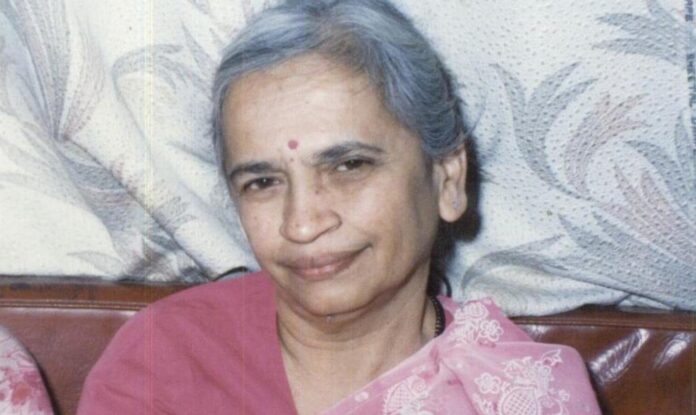
Early Curiosity and an Unusual Path
Shakuntala Bhagat’s journey began at a time when engineering was almost entirely a man’s world. Yet she walked into this space with a quiet certainty, driven by a deep curiosity about how buildings and bridges hold their strength. Growing up with her father, the respected structural engineer Prof. V. T. Shah, she was surrounded by drawings, models, and conversations about materials and forces. What looked technical to others felt like a natural language to her.
Her path into civil engineering wasn’t a struggle to prove anything she simply felt drawn to the field. And when she graduated, she became India’s first woman civil engineer, a milestone she carried with grace rather than pride.
A Partnership Built on Trust and Ideas
After completing her studies, Shakuntala joined her father to establish Bhagat Engineering, a practice that became a quiet powerhouse in structural design. Their partnership was grounded in mutual respect. Her father brought decades of experience; she brought a fresh, fearless mind and a willingness to explore unconventional ideas.
Together, they created a space where innovation wasn’t just encouraged — it was expected. This father–daughter team pushed each other to refine ideas, simplify designs, and solve structural challenges that others often avoided.
Reinventing Bridge Construction in India
One of Shakuntala’s most pioneering contributions was in bridge engineering. She co-developed the Bhagat–Shah Bridge System, a modular and precast method that allowed bridges to be built faster, more efficiently, and more cost-effectively.
This invention didn’t just save money it transformed how India could build in difficult terrains and rural regions. Places that once struggled with access could now receive bridges built with precision, safety, and speed. Her work carried a quiet humanitarian impact, strengthening connections between communities and improving daily life for countless people.
Leadership Rooted in Calm and Clarity
Shakuntala was known for her calm presence on construction sites. She wasn’t the loudest voice, but she was always the one people listened to. Her instructions were clear, her reasoning strong, and her respect for every person from senior engineers to ground-level workers was unwavering.
Her style of leadership was gentle but firm. She believed in getting every detail right, not for perfection’s sake, but for safety and longevity. Her drawings were crisp, her calculations meticulous, and her decisions deeply thoughtful. She practiced engineering as a responsibility, not a profession.
A Legacy That Still Inspires
Shakuntala Bhagat passed away in 2012, but her influence continues to shape modern engineering in India. She changed what was possible for women in technical fields, not by speaking about it, but by quietly proving it through her work.
Her bridges still stand strong, and so does the message she left behind: that brilliance doesn’t need noise, and real impact doesn’t always come from the spotlight. Sometimes it comes from someone who simply shows up every day, does the work with heart, and leaves the world stronger and safer than before.

