

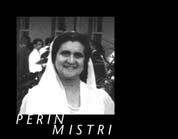
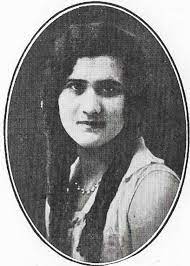
Childhood and Breaking down Barriers
Born in 1913 into Mumbai’s illustrious Bhabha family—her brother was the renowned nuclear physicist Homi J. Bhabha—Perin Jamsetjee Mistri (née Bhabha) defied the conventions of her time. In an era when women’s roles were largely confined to the home, she enrolled at Sir J.J. School of Art in Mumbai, graduating in 1936 as India’s first professionally qualified female architect. This milestone was revolutionary, quietly challenging the gender norms of pre-Independence India.
A Pioneering Career in a Male-Dominated Field
Perin’s journey was marked by quiet determination rather than loud acclaim. She established her own practice in the 1940s, focusing on residential and institutional projects across Mumbai and Pune. Unlike the European modernists then shaping India’s architectural narrative (like Le Corbusier or Louis Kahn), Perin worked without fanfare, blending Art Deco influences with pragmatic, context-sensitive designs. She often collaborated with her husband, Jamsetjee Mistri, a builder, merging architectural vision with on-ground execution—a rarity for women then.
Design Philosophy and Legacy
Though few of her buildings are well-documented, her work reflected a functional, human-centric approach. She designed bungalows, schools, and hospitals, prioritizing livability over grand gestures. Her style bridged traditional Indian spatial planning and modernist simplicity, foreshadowing later sustainable design principles. Unlike her male contemporaries, Perin’s contributions were overlooked in architectural histories, a fate shared by many women pioneers. Yet, her very presence in the field laid the groundwork for future generations—from Brinda Somaya to Anupama Kundoo.

Why She Matters Today
Perin’s legacy isn’t etched in iconic structures but in invisible barriers broken. She proved that architecture wasn’t a masculine domain, inspiring countless women to enter the profession. In a field now grappling with gender equity, her story is a reminder that India’s first women architects were pioneers of substance, not just symbols.
“She didn’t just design buildings—she designed possibilities.”

