

Table of Contents
- Early Life and Personal Hardship
- A Historic Education at Guindy
- Professional Career and Key Projects
- International Advocacy for Women in STEM
- Death and Lasting Legacy
- Early Life and Personal Hardship
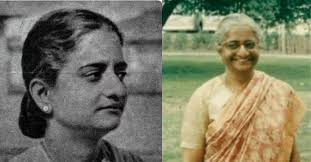
Born on August 27, 1919, in Chennai, A. Lalitha grew up in a middle-class Telugu-speaking family. In accordance with the customs of the early 20th century, she was married at the age of 15. Tragedy struck just a few years later when her husband passed away in 1937, leaving her an 18-year-old widow with a four-month-old daughter named Syamala.
Refusing to accept the isolated life typically prescribed for widows at the time, and with the unwavering support of her father, Pappu Subba Rao (a professor of engineering), she decided to pursue a professional degree to ensure her daughter’s future and her own independence.
- A Historic Education at Guindy
Lalitha chose the challenging path of engineering, a field then entirely occupied by men.
- The admission: Her father petitioned the College of Engineering, Guindy (CEG) to admit her. As the first female student, the college had to modify its rules and even strike out “He” to write “She” on her eventual degree.
- Campus Life: She lived in a separate hostel and was later joined by two other women, P.K. Thressia and Leelamma George.
- The Milestone: In 1943, she graduated with a degree in Electrical Engineering, becoming the first woman in India to do so.
- Professional Career and Key Projects
Lalitha’s career spanned over three decades, marked by technical excellence and contributions to India’s infrastructure.
- Bhakra Nangal Dam: While working for the British firm Associated Electrical Industries (AEI), she contributed to the design of transmission lines and protective gear for this massive national project.
- Research and Patents: Before her long tenure at AEI, she assisted her father in researching smokeless ovens and an electrical musical instrument called the “Jelectromonium.”
- Duration: She remained with the same firm (later GEC) for nearly 30 years until her retirement in 1977.
- International Advocacy for Women in STEM
Lalitha was a global representative for Indian women in technical fields.
- ICWES 1964: She was the only female engineer from India to attend the First International Conference of Women Engineers and Scientists in New York.
- WES London: She became a full member of the Women’s Engineering Society of London in 1965 and helped facilitate the attendance of other Indian women at international conferences.
- Death and Lasting Legacy
Lalitha passed away in 1979 at the age of 60 due to a brain aneurysm. She never remarried, choosing instead to focus on her career and her daughter, who eventually became a teacher.
Lalitha’s legacy is not just in the transmission lines she designed, but in the barriers she broke. She proved that technical skill is not gendered and that personal tragedy can be the catalyst for a revolutionary journey.

